Play Therapy
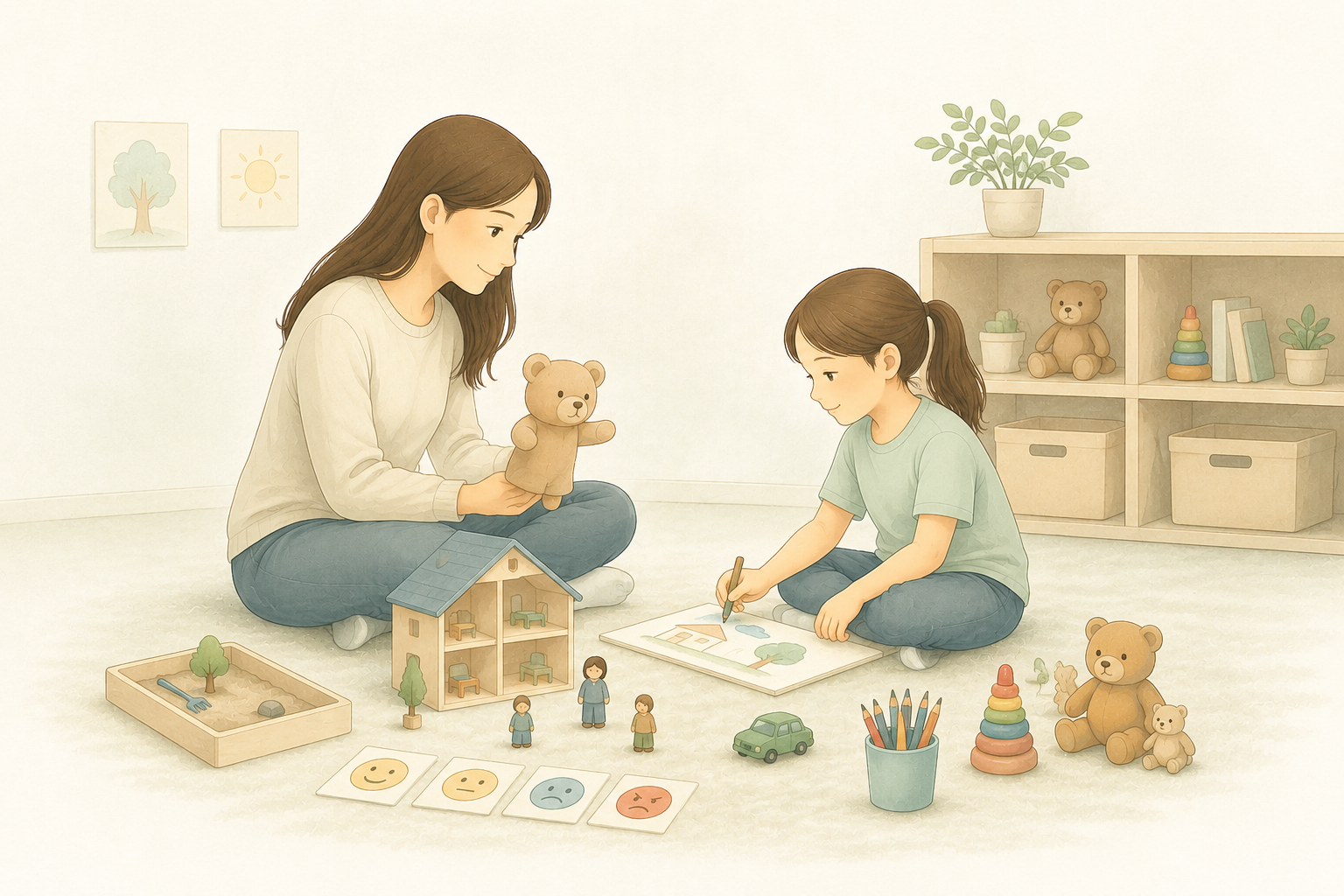
Play is a child's language, and toys are their words.
Children don't always have the words to tell us they're anxious, overwhelmed, frustrated, sad, or struggling. Instead, they show us through behavior, play, imagination, and connection.
Play therapy creates a space where children can communicate in the language that comes most naturally to them. Through carefully selected toys, creative activities, and a trusting therapeutic relationship, children are able to explore emotions, develop coping skills, build confidence, and process life's challenges in a way that feels safe and understandable.
Sometimes the most important conversations with children don't happen through words at all—they happen through play.
Why is Play Therapy Important?
Children are still developing the emotional, cognitive, and language skills necessary to describe complex internal experiences. Expecting children to process difficulties in the same way adults do can often lead to frustration and limited progress. Play therapy meets children where they are developmentally, allowing them to engage in treatment in a manner that feels natural, safe, and meaningful.
Through play, children can practice new skills, explore emotions, increase self-understanding, and develop healthier ways of responding to challenges. The therapeutic process helps children build resilience, confidence, emotional flexibility, and stronger relationships both at home and in other environments.
Who Can Benefit from Play Therapy?
Play therapy can support children who appear to be struggling emotionally but have difficulty identifying or communicating what they are experiencing. Play therapy is also helpful for children experiencing the concerns listed below.
Anxiety and excessive worry
Separation anxiety and difficulty being away from caregivers
Social anxiety and fears related to peer interactions
Obsessive-compulsive symptoms (OCD)
Specific fears and phobias
Health-related anxieties, including fears of illness, vomiting, contamination, or germs
Difficulty tolerating uncertainty
Emotional regulation challenges, including frequent frustration, anger, or emotional outbursts
Low self-esteem and confidence concerns
Perfectionism and fear of making mistakes
Behavioral challenges at home or school
ADHD and impulse-control difficulties
Social skill deficits and peer relationship challenges
Family transitions, divorce, or changes within the home
Grief and loss
Trauma and stressful life experiences
Difficulty identifying, expressing, or understanding emotions