Exposure & Response Prevention Therapy
If you find yourself avoiding places, seeking constant reassurance, or feeling trapped by intrusive thoughts and overwhelming fear, ERP offers a path toward lasting relief.
Exposure and Response Prevention (ERP) Instead of avoiding the thoughts, feelings, or situations that cause fear, ERP helps you gradually face them in a safe, supportive way while learning new ways to respond. Over time, this reduces anxiety, builds confidence, and helps you regain freedom from the patterns that have been keeping you stuck. ERP can help children, teens, and adults struggling with OCD, panic, phobias, health anxiety, social anxiety, perfectionism, and other anxiety-related concerns.
Example
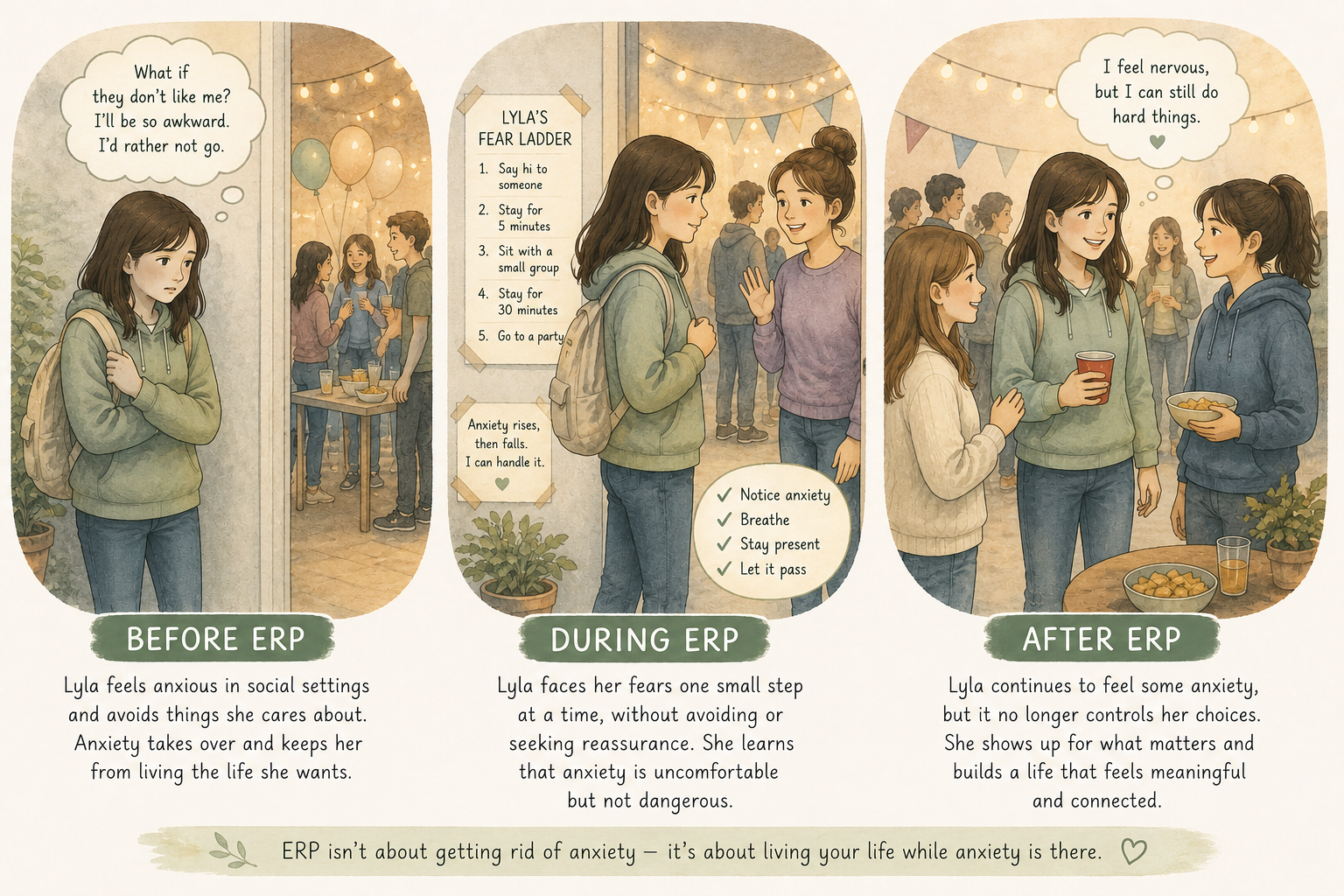
Lyla feels anxious in social settings, so she starts avoiding parties, school events, and other experiences that matter to her. Over time, her world becomes smaller as anxiety begins making more and more of her decisions.
First, we'll spend time understanding what anxiety looks like for Lyla and identify the situations she avoids. Together, we'll build a "fear ladder," ranking situations from the least anxiety-provoking to the most difficult.
Second, we'll begin practicing those situations one step at a time. Maybe that starts with making eye contact with a classmate, saying hello to a cashier, or staying at a gathering for five minutes. As confidence grows, we'll gradually work toward more challenging situations.
During each exposure, Lyla learns strategies to notice anxiety without letting it take control. Rather than escaping the feeling or seeking reassurance, she'll learn that anxiety naturally rises and falls—and that she is capable of handling it.
Over time, these repeated experiences help retrain the brain. The goal isn't to eliminate anxiety completely. It's to help Lyla stop organizing her life around fear so she can confidently participate in the things that matter most to her.